
Footwear manufacturing guides · 08/10/2026
Footwear Manufacturing Process Flow Chart: Step-by-Step Guide
A 12-step footwear manufacturing process flow chart, where to place quality checkpoints, and how buyers use the flow chart when working with a factory.
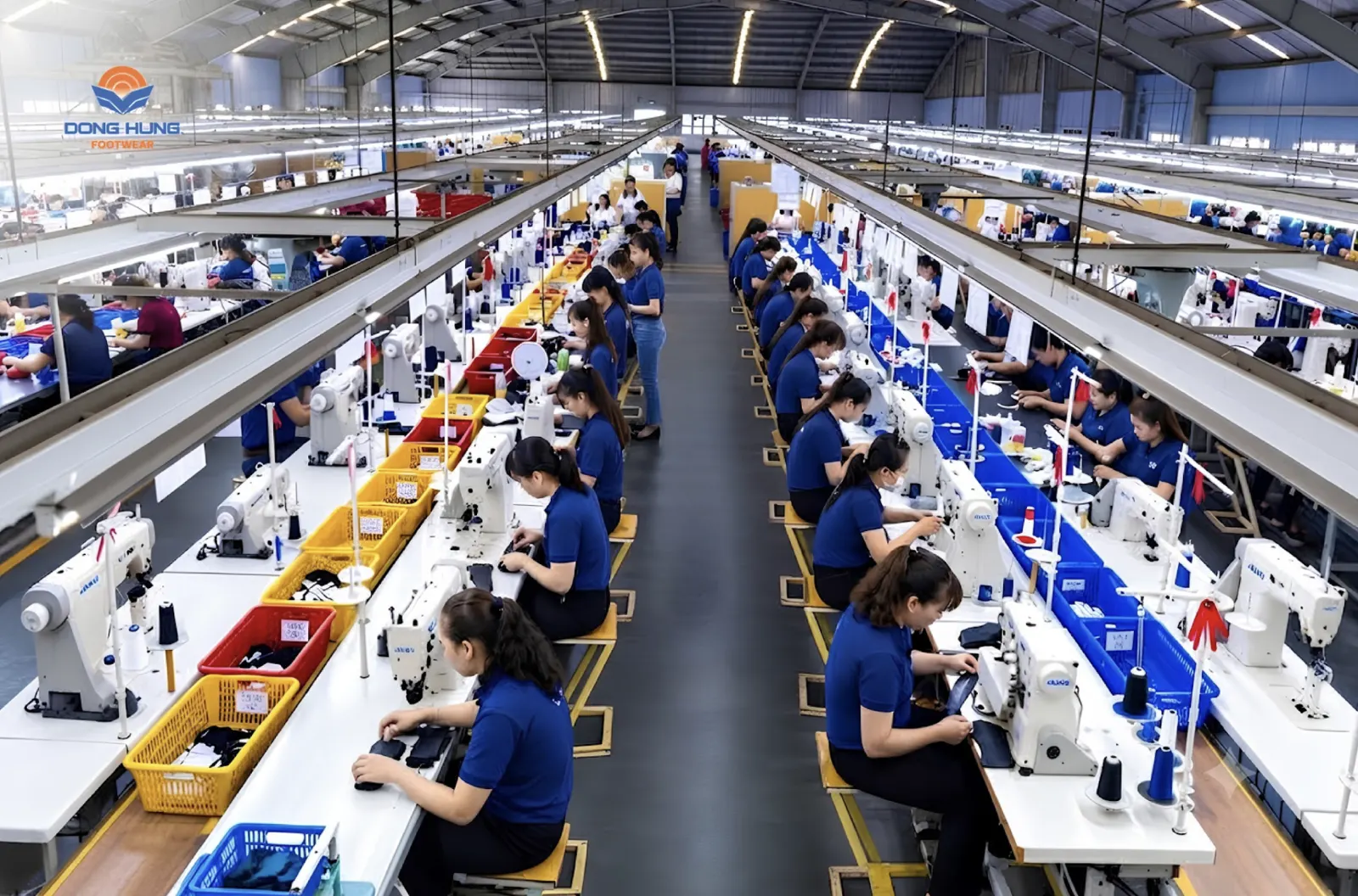
Understanding a footwear manufacturing process flow chart helps footwear brands, importers, and sourcing teams see how a shoe moves from approved specifications to a finished product. It also clarifies how materials, production operations, and quality checks connect throughout the manufacturing workflow.
Although the exact sequence varies by footwear category, construction method, and factory setup, most production workflows share several key stages: order and specification review, material preparation, component cutting, upper preparation, assembly, finishing, and final inspection.
This guide explains the typical footwear manufacturing process flow chart, what happens at each stage, and which checkpoints buyers should understand when evaluating a manufacturing partner.
1. What Is a Footwear Manufacturing Process Flow Chart?
A footwear manufacturing process flow chart is a visual representation of the steps involved in producing shoes. It shows the order of operations and how work moves from one stage to another.
For footwear manufacturers, the chart can help organize production activities, clarify responsibilities, identify inspection points, and communicate the overall workflow to relevant teams.
For buyers, it provides a practical overview of how a product is manufactured and where material specifications, approved samples, and quality requirements may affect production.
A process flow chart is not necessarily identical for every shoe. Sneakers, vulcanized shoes, leather dress shoes, sandals, and specialized footwear may require different materials, equipment, assembly methods, and quality checks.
2. Footwear Manufacturing Process Flow Chart
The following chart presents a simplified overview of a typical footwear production workflow.
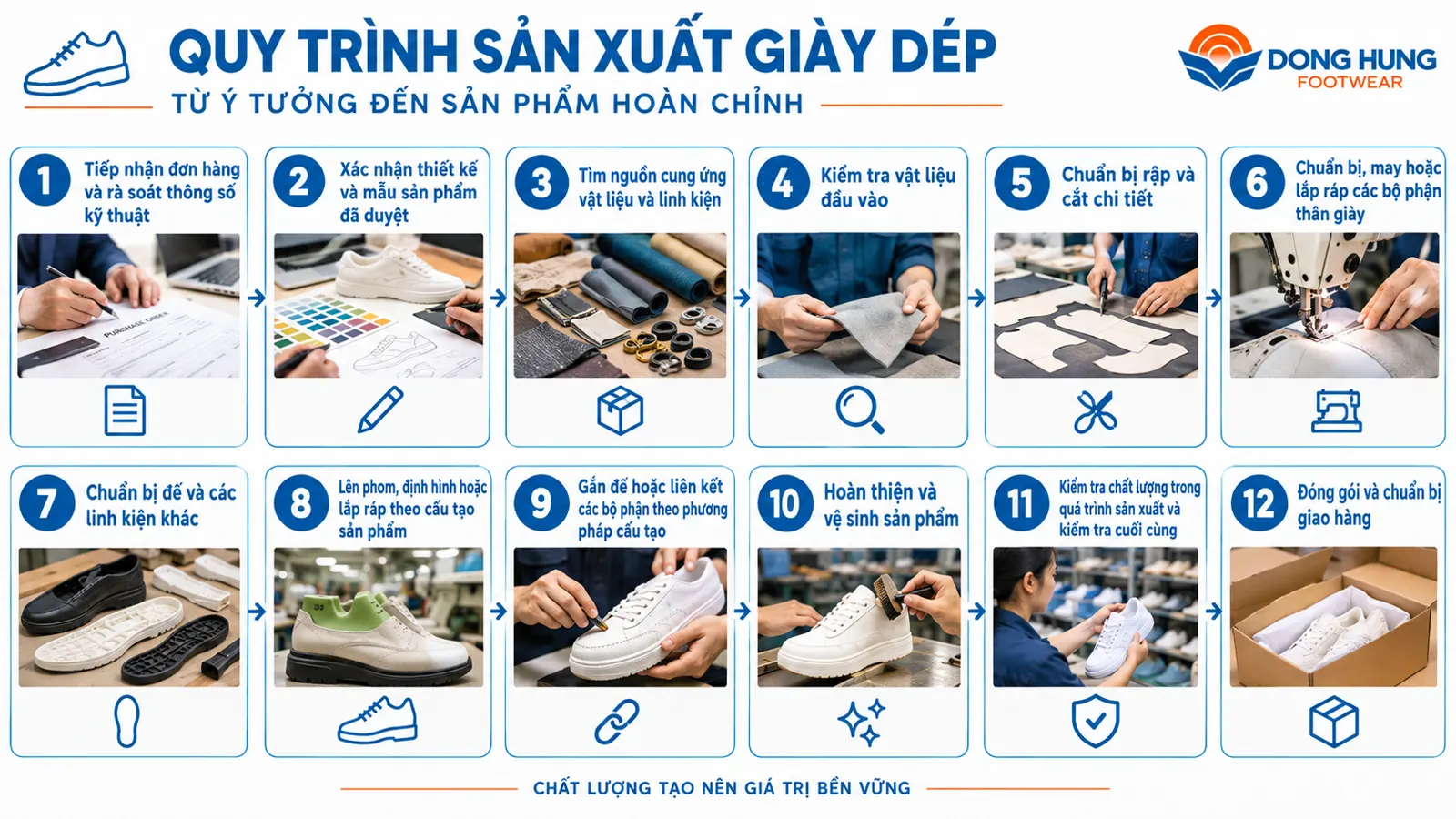
Important: This is a general reference, not a universal factory sequence. Some operations may occur in parallel, while others may be reordered, combined, or omitted depending on the product and construction method. For example, vulcanized footwear may follow a different assembly and vulcanization sequence from footwear made using other construction methods.
3. Where Should Quality Checkpoints Be Placed in the Flow Chart?
A useful footwear manufacturing process flow chart shows not only the sequence of operations but also where important decisions and inspections take place.
The following simplified checkpoint map can help buyers understand the workflow:
| Production stage | Example of a checkpoint | Purpose |
|---|---|---|
| Order preparation | Specifications and approved sample confirmed | Prevent misunderstandings before production |
| Material sourcing | Incoming material inspection | Identify nonconforming materials |
| Cutting | Component shape and dimensions checked | Reduce cutting-related defects |
| Upper preparation | Stitching and alignment reviewed | Maintain assembly consistency |
| Component preparation | Dimensions and compatibility verified | Reduce fitting and assembly issues |
| Assembly | Construction and joining reviewed | Identify assembly defects |
| Finishing | Appearance and completeness checked | Prepare products for final inspection |
| Final inspection | Product evaluated against acceptance criteria | Determine conformity with requirements |
| Packing | Labels, quantities, and cartons verified | Reduce packing and shipment errors |
These checkpoints are illustrative. The appropriate control plan depends on the product, manufacturing method, buyer requirements, and risk assessment.
4. How Buyers Can Use a Footwear Manufacturing Process Flow Chart
A process flow chart is useful during supplier discussions because it provides a shared reference for production planning and communication.
Ask how the workflow applies to your product
Request an explanation of the production sequence for the specific footwear category you intend to manufacture. A general chart may not show every operation required for a particular construction.
Clarify inspection responsibilities
Ask which checks take place at incoming material inspection, during production, and before shipment. Clarify how defects are recorded and how corrective actions are communicated.
Confirm how changes are controlled
Changes to materials, components, or design specifications may affect several production stages. Buyers should understand how changes are approved, documented, and communicated to relevant teams.
Align the workflow with the production schedule
Discuss material readiness, sample approval, production milestones, inspection arrangements, and shipment preparation. A process chart helps identify dependencies, but the actual schedule must be confirmed for each order.
Request relevant documentation
Where appropriate, buyers can request process descriptions, approved specifications, inspection records, or other documents relevant to their project. The availability and scope of these documents should be confirmed with the manufacturing partner.
📍 Address:
👉 Factory: Hiep Tam Hamlet, Dinh Quan Commune, Dong Nai City, Vietnam
👉 Office: 667 Dien Bien Phu Street, Thanh My Tay Ward, Ho Chi Minh City, Vietnam
☎️ Hotline: +84 274 3727017