Footwear manufacturing guides · 09/10/2026
Custom Footwear Manufacturing: How to Develop Your Own Shoe Line
Plan a custom shoe line step by step: define requirements, choose a design approach, develop samples, confirm MOQ, cost and timeline, then control bulk quality.
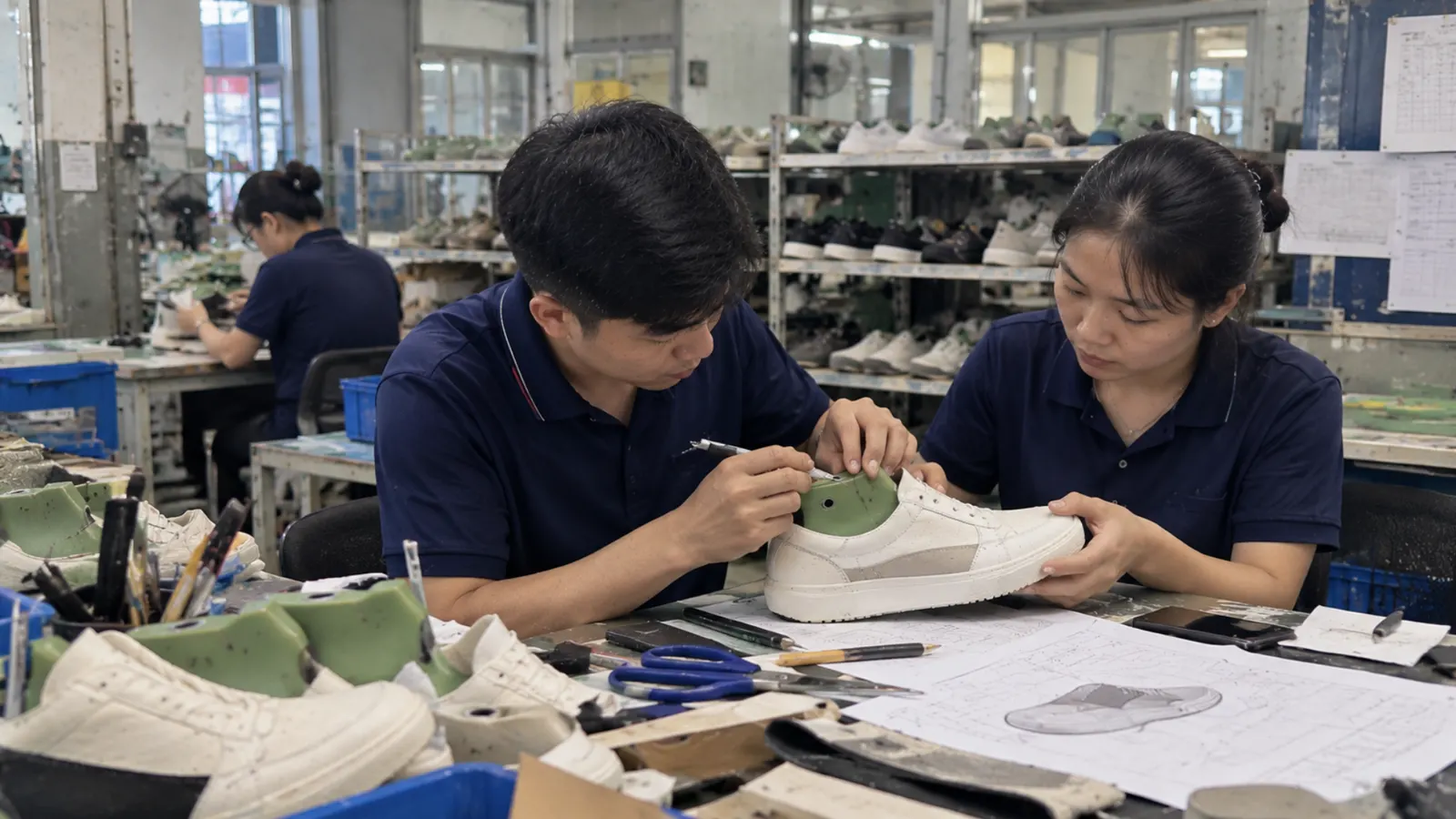
Custom footwear manufacturing allows brands and businesses to develop shoes based on their specific requirements for design, materials, construction, functionality, and brand identity. Instead of choosing only from existing styles, buyers can work with manufacturers to modify designs, develop samples, and prepare products for mass production.
This guide explains the key steps involved in developing a custom shoe line.
1. What Is Custom Footwear Manufacturing?
Custom footwear manufacturing is the process of developing or modifying footwear according to a buyer’s specific requirements.
Common customization options include:
- Design: Adjusting shoe shapes, details, and material combinations.
- Materials and colors: Selecting suitable upper materials, linings, soles, and color combinations.
- Branding: Adding logos, labels, and other approved brand elements.
- Construction and sizing: Defining how components are assembled and specifying size ranges and fit requirements.
- Packaging: Customizing shoe boxes, labels, and other packaging elements.
The level of customization depends on the project and the manufacturer's capabilities. Businesses may modify an existing style, combine an existing design with new details, or develop a completely new product.
2. Define Product Requirements and Choose a Design Approach
Before contacting a manufacturer, businesses should prepare a clear product brief to communicate their expectations.
Important information includes:
- Target market and customer profile.
- Footwear category, design references, and intended use.
- Preferred materials, colors, construction, and branding.
- Size range and functional requirements.
- Estimated order quantity, target budget, and expected timeline.
- Packaging, quality, and relevant compliance requirements.
Based on these requirements, businesses can consider three approaches:
- Modify an existing style: Change colors, materials, logos, or selected details. This may reduce the need for new design development, depending on the requested changes.
- Develop a new design: Suitable for products requiring distinctive shapes, specialized construction, or unique features. This approach may require additional technical development and sample revisions.
- Combine existing designs with new features: Use an existing design as a starting point and add customized components to create a distinctive product.
The right approach depends on brand objectives, technical feasibility, budget, and the manufacturer's actual capabilities.
3. Select Materials and Develop Samples
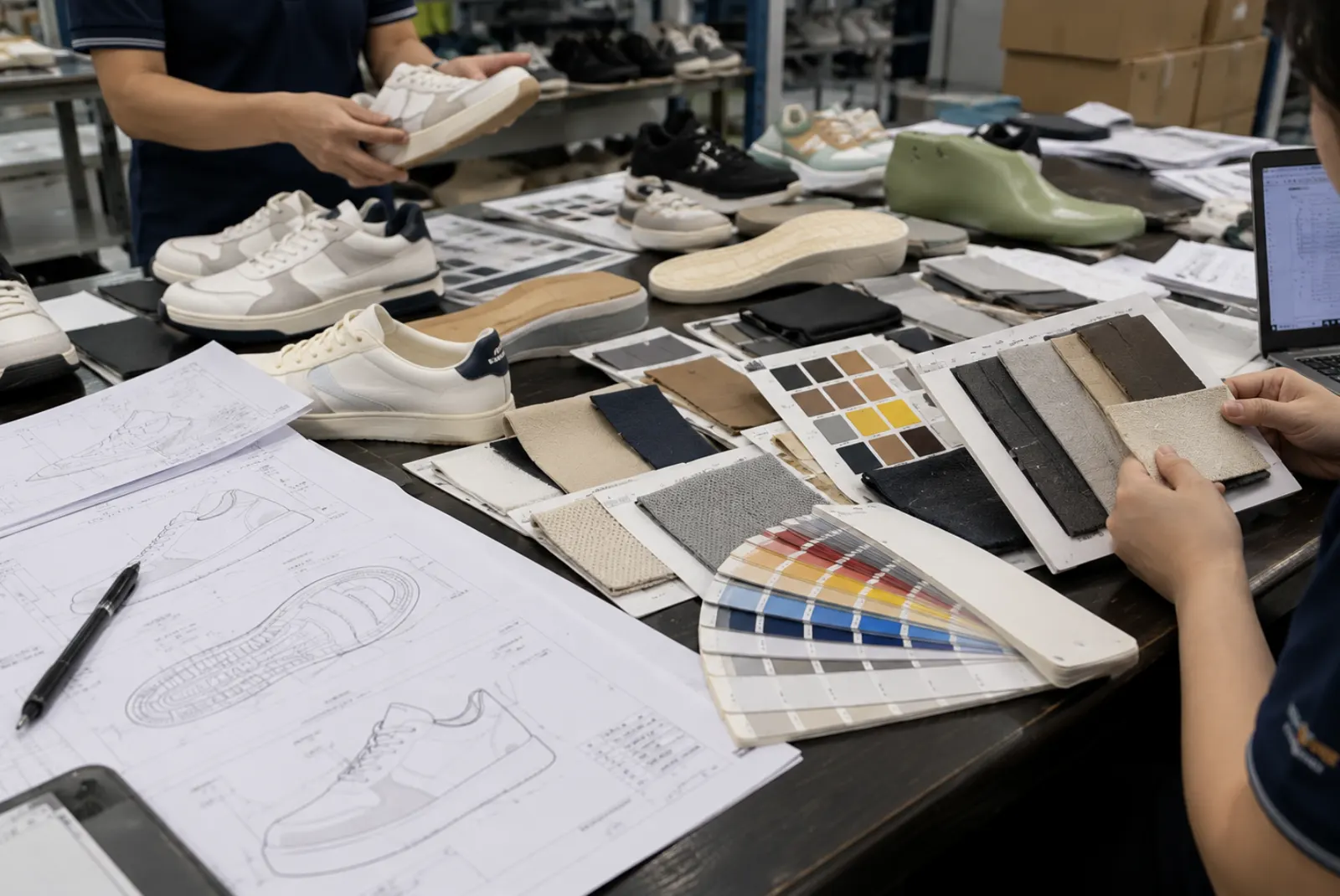
Material selection affects a shoe's appearance, comfort, durability, cost, and manufacturability. Depending on the footwear category, options may include leather, synthetic leather, textiles, mesh, rubber, foam materials, and other specialized materials.
Businesses should evaluate materials based on intended use, performance requirements, compatibility with the shoe construction, supply availability, and budget. A material that looks suitable in a reference image may not perform as expected during manufacturing, so technical evaluation is important.
Sample development allows buyers to assess the product before mass production. Depending on the project, evaluation may cover:
- Overall design, colors, and materials.
- Sizing and fit.
- Stitching, bonding, and finishing.
- Logo placement and brand details.
- Compliance with agreed product specifications.
Feedback and revisions should be documented clearly. Before approving the final sample, buyers should confirm that the product meets the agreed design and technical requirements. The approved sample and specifications should then serve as references for production.
4. Confirm MOQ, Costs, and Production Timeline
Before placing an order, buyers should clarify the commercial terms and production schedule with the manufacturer.
MOQ (Minimum Order Quantity) refers to the minimum quantity accepted for an order. MOQ may vary depending on the footwear style, materials, color options, customization level, and production requirements. Buyers should confirm the applicable MOQ for their specific project rather than assume a standard quantity.
Project costs may include:
- Product development and sample-making fees.
- Molds or specialized tooling, if required.
- Materials, components, and manufacturing.
- Branding, packaging, and finishing.
- Testing or inspection required for the project.
- Shipping and other agreed charges.
Not every project incurs all these costs. Buyers should request a detailed quotation that clarifies which items are included and which are charged separately.
The production timeline should also identify key stages, from sample development and material sourcing to manufacturing, quality inspection, and shipment preparation. Design changes or delayed approvals may affect the agreed schedule.
5. Prepare for Production and Maintain Quality
Once the sample and commercial terms are approved, both parties should confirm the final specifications, materials, colors, size range, quantities, packaging requirements, and quality criteria.
Depending on the manufacturing process, quality checks may take place during material receiving, upper production, assembly, finishing, and final inspection.
Common inspection points include:
- Material condition and consistency.
- Product dimensions and specifications.
- Stitching, bonding, and finishing.
- Color, appearance, and branding.
- Relevant functional or testing requirements.
An approved sample provides an important reference, but it does not automatically guarantee that every finished pair will be identical. Buyers should clarify inspection procedures, acceptance criteria, defect handling, and each party's responsibilities before production begins.
Any changes made after approval should be formally reviewed and documented to reduce inconsistencies between the approved sample and finished products.
Discuss Your Custom Footwear Project with Dong Hung Footwear
For brands and businesses exploring footwear manufacturing in Vietnam, a clear product brief is a useful starting point for discussing potential production requirements.
Dong Hung Footwear is a potential partner for businesses to learn more about and discuss their footwear manufacturing needs. Specific customization options, product development support, MOQ, pricing, and lead times should be confirmed directly based on each project's requirements.
📍 Address:
👉 Factory: Hiep Tam Hamlet, Dinh Quan Commune, Dong Nai City, Vietnam
👉 Office: 667 Dien Bien Phu Street, Thanh My Tay Ward, Ho Chi Minh City, Vietnam
☎️ Hotline: +84 274 3727017