
Footwear manufacturing guides · 07/10/2026
Footwear Design and Manufacturing: From Idea to Finished Product
The full footwear design and manufacturing journey: market research, materials, sample development, production planning, quality control and partner selection.

Footwear design and manufacturing involve several stages, from market research and product development to material selection, sample creation, mass production, and quality control. Understanding this process helps footwear brands, importers, and retailers develop products that meet their target market’s needs.
For businesses looking for a footwear manufacturing partner, a clear understanding of each stage can help improve communication, manage production expectations, and support consistent product quality.
1. Understanding Footwear Design and Manufacturing
Footwear manufacturing transforms a product concept into a finished shoe through a series of coordinated processes. Depending on the product type and construction method, these processes may include design development, pattern making, material preparation, cutting, stitching, assembly, sole attachment, and finishing.
Different footwear categories require different production techniques. Vulcanized footwear, for example, uses heat to cure rubber, while other shoe constructions may require different sole attachment and assembly methods.
Understanding the intended use, design, materials, and performance requirements is essential before production begins.
2. Market Research and Footwear Design Development
Market research helps businesses identify customer preferences, market trends, target price ranges, and competing products. These insights provide a foundation for developing footwear that aligns with market demand.
Before starting the design process, buyers should prepare a clear product brief covering:
- Target customers and intended use
- Design references and key features
- Preferred materials and colors
- Target price range
- Expected order quantity and timeline
Designers can then translate these requirements into product concepts, technical drawings, and specifications. A well-defined brief helps reduce misunderstandings and supports smoother communication between buyers and manufacturers.
3. Material Selection and Sample Development
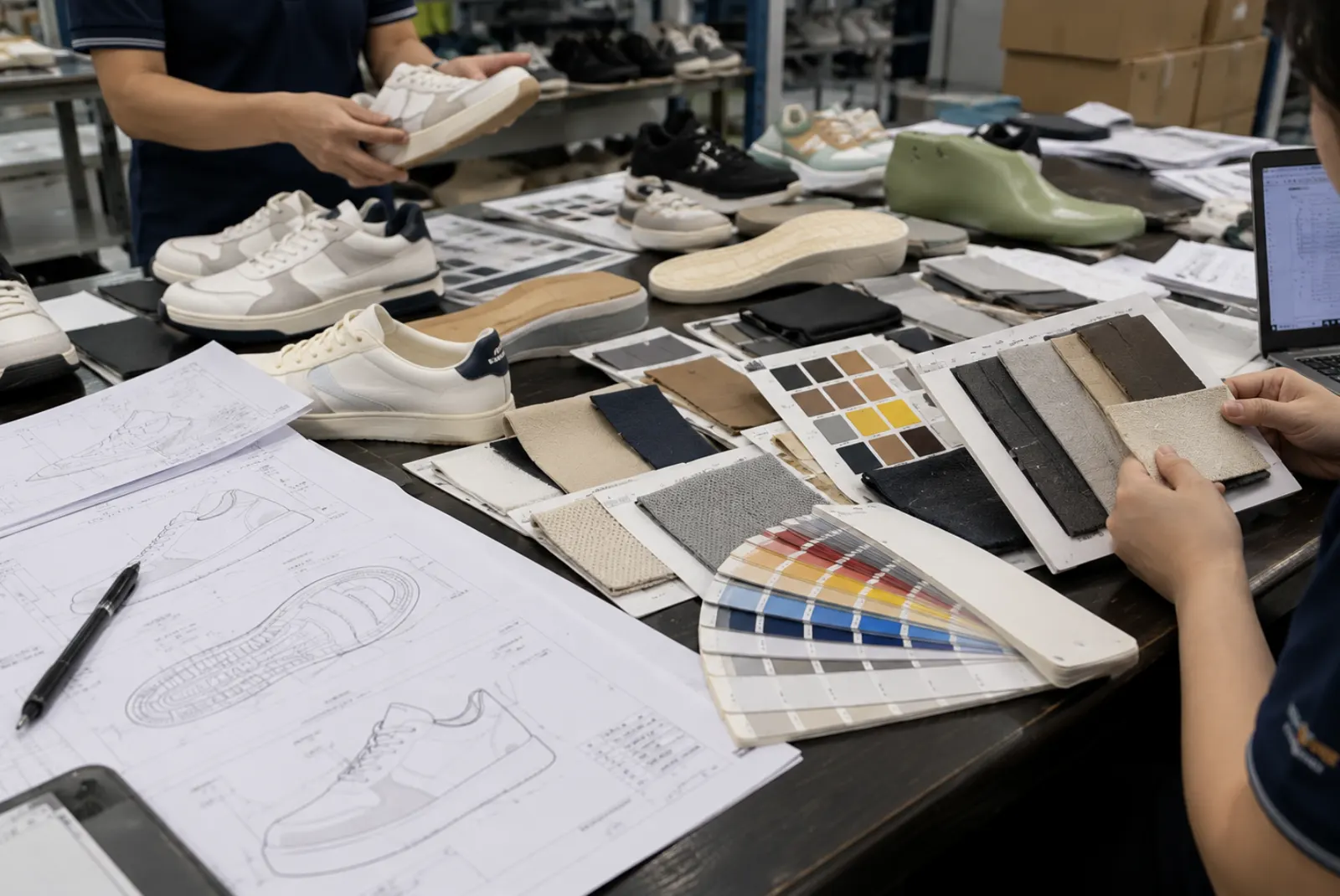
Material selection affects a shoe’s appearance, comfort, durability, performance, and production cost. Common footwear materials include leather, synthetic leather, textiles, mesh, rubber, and other specialized materials.
The appropriate choice depends on the product’s intended use, design requirements, target market, and budget. Buyers and manufacturers should evaluate material properties and construction compatibility before confirming the final specifications.
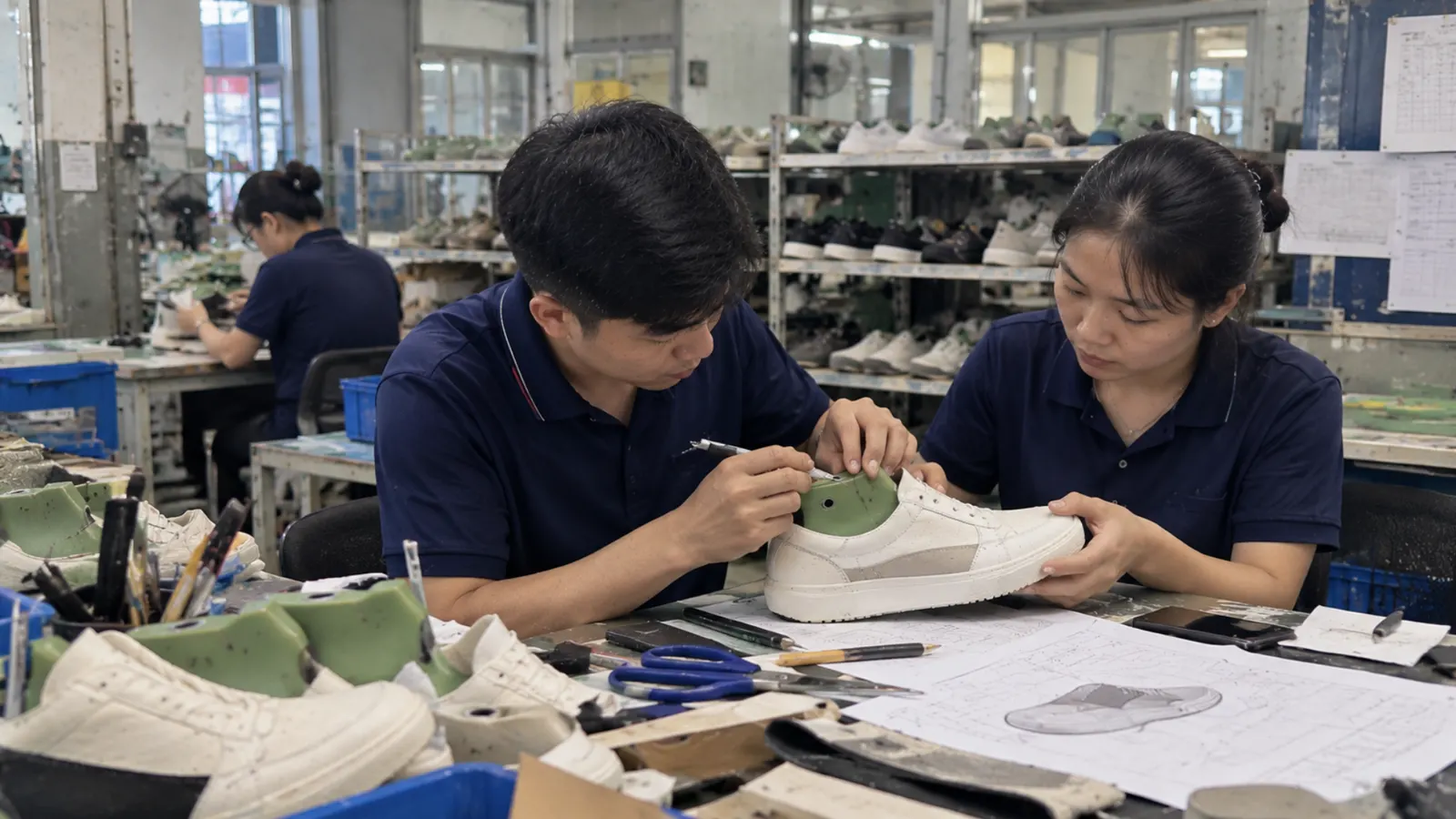
Sample development allows businesses to review the product before mass production. Samples can be used to assess appearance, fit, construction, materials, and finishing. Feedback and necessary adjustments should be completed before approving the final sample and production specifications.
4. Footwear Production Planning and Manufacturing
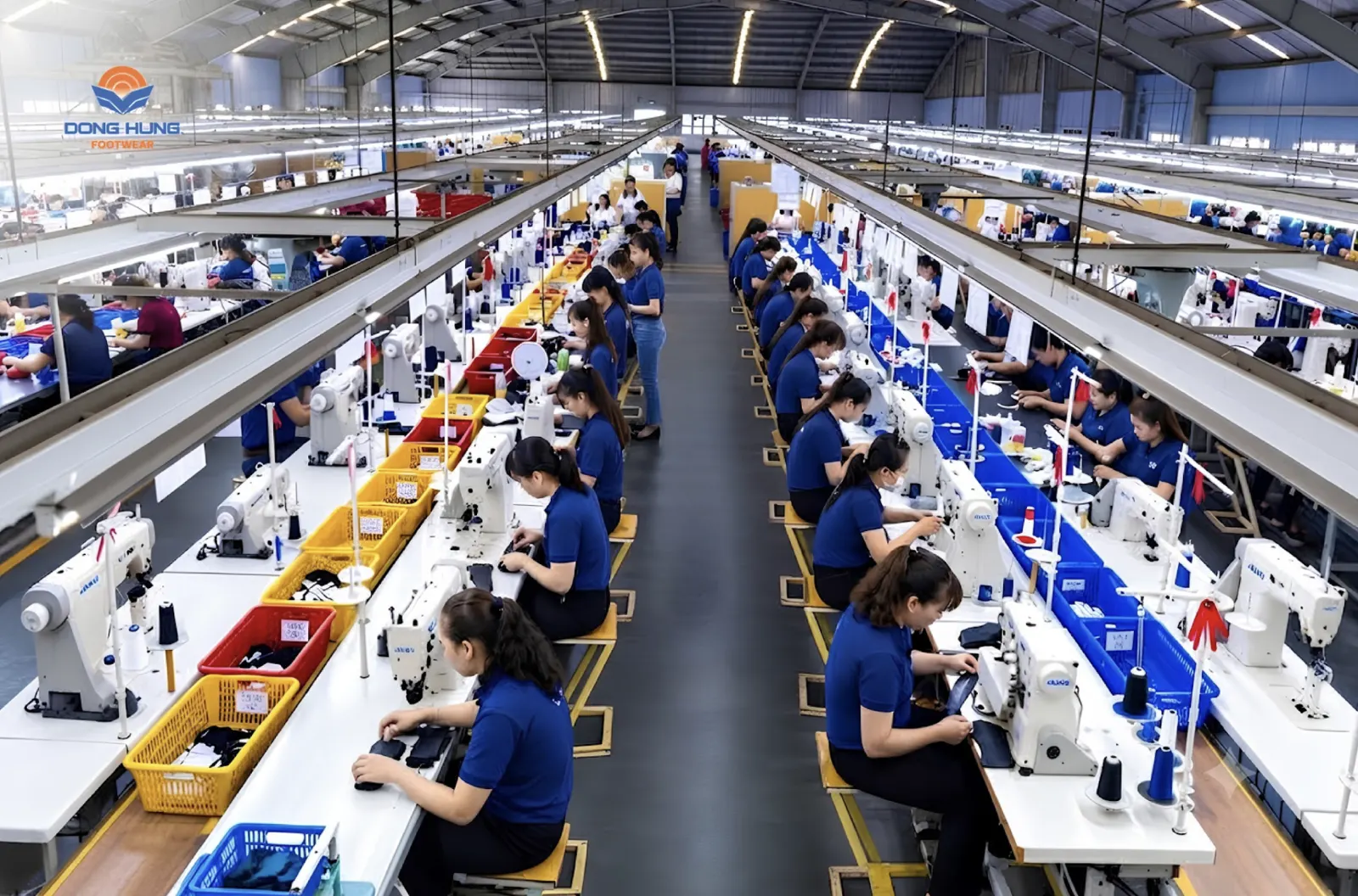
Once the sample and specifications are approved, the manufacturer can prepare for production. Planning may include material sourcing, production scheduling, workforce allocation, equipment preparation, and coordination between production stages.
Depending on the shoe construction, manufacturing may involve cutting materials, stitching uppers, preparing soles, assembling components, attaching soles, and completing final finishing.
Clear specifications and effective coordination help minimize production errors and maintain consistency across batches. Buyers should communicate their requirements early and confirm key milestones with their manufacturing partner.
5. Quality Control and Common Production Challenges
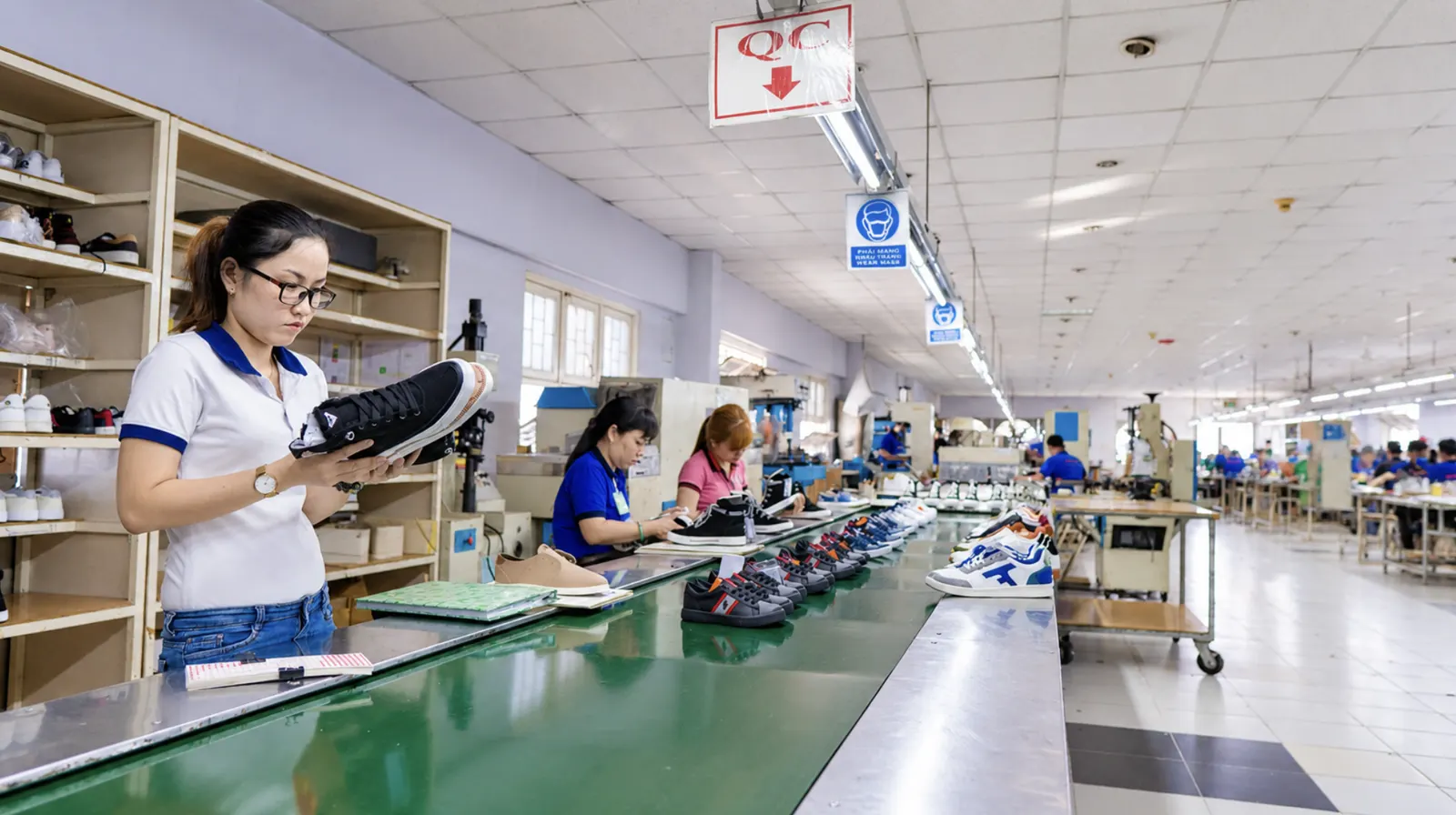
Quality control helps ensure that finished footwear meets agreed specifications and customer expectations. Depending on the product and quality requirements, inspections may cover:
- Material condition and consistency
- Dimensions and sizing
- Stitching and construction
- Sole attachment and bonding
- Color, appearance, and finishing
- Relevant functional requirements
Common production challenges include material inconsistencies, sample-to-production differences, unclear specifications, and schedule changes. These issues can be reduced through clear documentation, sample approval, regular communication, and quality checks throughout the manufacturing process.
Quality requirements should be agreed upon before production begins to help align expectations between buyers and manufacturers.
6. How to Choose the Right Footwear Manufacturing Partner
Choosing a suitable footwear manufacturer is an important step in turning a product concept into a market-ready product. Buyers should consider several factors:
- Relevant experience: Experience with the required footwear category and construction method.
- Product development support: The ability to work with buyers on designs, materials, and samples.
- Manufacturing capabilities: Production processes and capabilities that match the project’s requirements.
- Quality control: Established procedures for checking products against agreed specifications.
- Communication: Clear coordination on samples, production progress, timelines, and potential issues.
Rather than evaluating a manufacturer based on a single factor, businesses should assess how well its capabilities align with their product requirements and long-term sourcing objectives.
📍 Address:
👉 Factory: Hiep Tam Hamlet, Dinh Quan Commune, Dong Nai City, Vietnam
👉 Office: 667 Dien Bien Phu Street, Thanh My Tay Ward, Ho Chi Minh City, Vietnam
☎️ Hotline: +84 274 3727017